 celebyachts.com
The maritime broadsheet of public waters · Register current through 27 Jul 2026
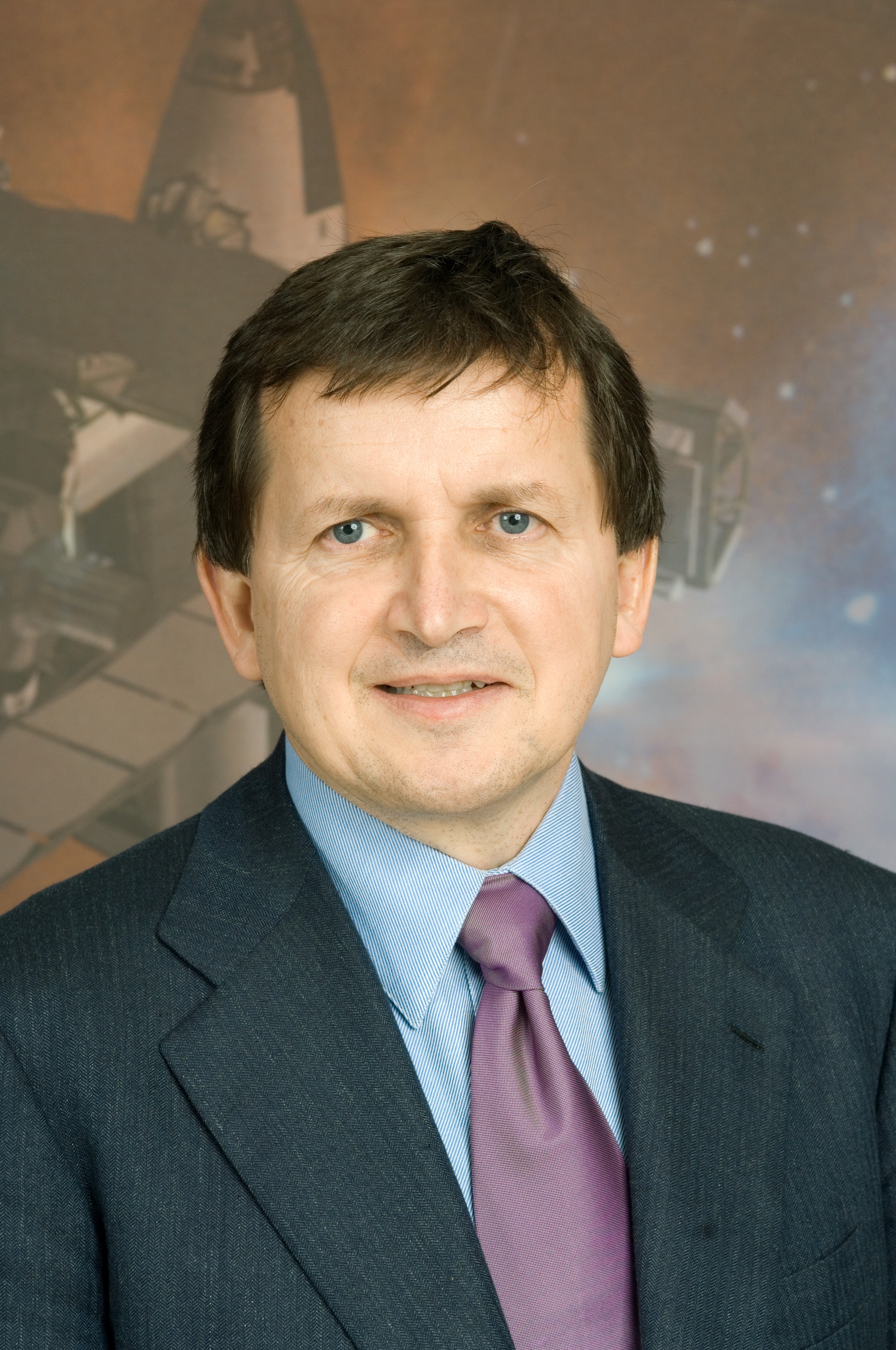
Hungarian-American billionaire software architect (b. 1948)
Charles Simonyi is a Hungarian-American software architect, businessman, and space tourist. He led the development of Microsoft's first application software, including early versions of Microsoft Office, and later co-founded Intentional Software, a company focused on his concept of intentional programming. A former researcher at Xerox PARC, he helped pioneer graphical user interfaces and introduced object-oriented programming and Hungarian notation to Microsoft. Simonyi flew to space twice as a private citizen, becoming the fifth space tourist and the only one to pay for two separate trips to
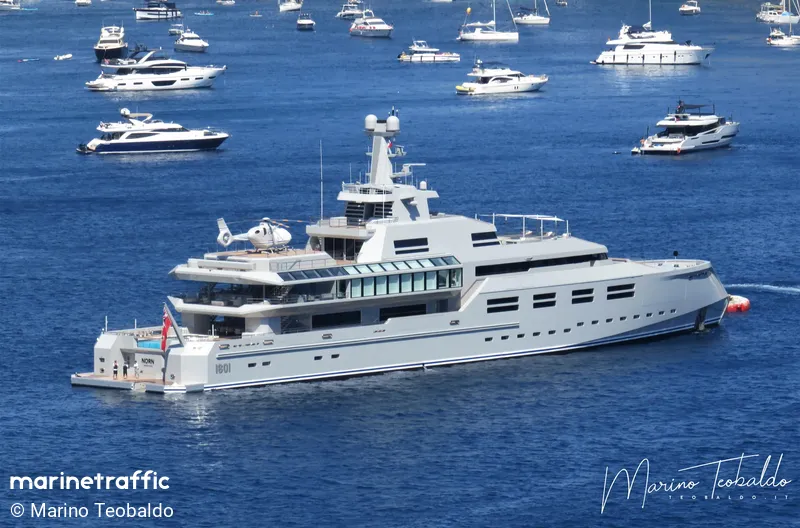 Lürssen (Rendsburg)
89.99 m · 295 ft · 2023 · Cayman Islands
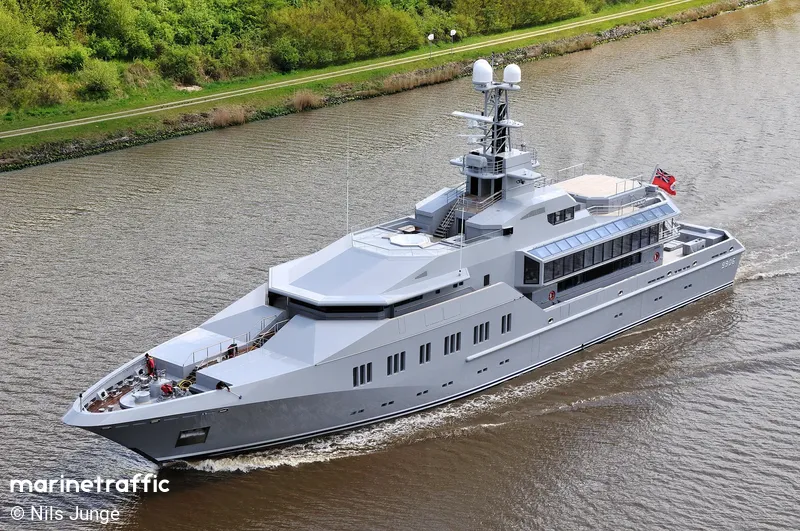 Lürssen
70.7 m · 232 ft · 2002 · Cayman Islands
Simonyi was born in Budapest, Hungary. His father, Károly Simonyi, was a Kossuth Prize-winning professor of electrical engineering at the Technical University of Budapest, and created the first Hungarian nuclear particle accelerator. While in secondary school he worked part-time as a night watchman at a computer laboratory in the early 1960s, overseeing a large Soviet Ural II mainframe. He took an interest in computing and learned to program from one of the laboratory's engineers. By the time he left school, he had learned to develop compilers and sold one of these to a government department. He presented a demonstration of his compiler to the members of a Danish computer trade delegation. In 2006 he said that when he was young his dream was, "to get out of Hungary, go to the West and be free."
Simonyi has been an active philanthropist. He has funded the establishment of three professorships:
In 1995, the Simonyi Professorship of the Public Understanding of Science at Oxford University, first held by Richard Dawkins (1995-2008), currently by Marcus du Sautoy A Simonyi Professorship for Innovation in Teaching endowed chair at Stanford University, held by Eric S. Roberts 1997-2002 In 2005, as part of $25 million donation, a Simonyi Professorship of Mathematical Physics at the Institute for Advanced Study in Princeton, New Jersey, held by Edward Witten 2005–present. In 2003 he founded the Charles and Lisa Simonyi Fund for Arts and Sciences, a nonprofit organization based in Seattle. The foundation provides grants to outstanding organization in art, sciences and education. Grant recipients have included the Seattle Symphony ($10 million), and the Seattle Public Library ($3 million), the Metropolitan Opera, the Juilliard School and the Vera C. Rubin Observatory, which host the Simonyi Survey Telescope. The $100 million foundation closed in 2013. In February 2017, Simonyi and his wife Lisa gave the University of Washington Computer Science and Engineering (CSE) department $5 million towards the completion of a new building.
Simonyi became a United States citizen in 1982. He was in a long-term relationship with businesswoman Martha Stewart, which lasted 15 years and ended in 2008. Later that year, on November 22, he married Lisa Persdotter, the daughter of a Swedish businessman, in a private ceremony in Gothenburg, Sweden, attended by close friends including Bill Gates. The couple has two daughters. Simonyi resides in Medina, Washington, in a modern home known as Villa Simonyi, designed by architect Wendell Lovett and featuring a collection of works by Roy Lichtenstein and Victor Vasarely. He formerly spent part of each year aboard his 233-foot (71 m) yacht Skat, which he sold in 2021. As of 2023, he owns a 295-foot (90 m) yacht named NORN, designed by Espen Oeino and registered in the Cayman Islands.
Simonyi's early career and interests are described in the book Programmers at Work, a collection of interviews published by Microsoft Press. At the age of 17, Simonyi left Hungary on a short-term visa but did not return. He was hired by Denmark's A/S Regnecentralen in 1966 where he worked with Per Brinch Hansen and Peter Kraft on the RC 4000 minicomputer's Real-time Control System, and with Peter Naur on the GIER ALGOL compiler. He subsequently moved from Denmark to the United States in 1968 to attend the University of California, Berkeley, where he earned his BS in Engineering Mathematics & Statistics in 1972 under Butler Lampson. He has honorary doctorate degrees from the Juilliard School in New York and from the University of Pécs in Hungary. Simonyi was recruited to Xerox PARC by Butler Lampson during its most productive period, working alongside Lampson, Alan Kay and Robert Metcalfe on the development of the Xerox Alto, one of the first personal computers. He and Lampson developed Bravo, the first WYSIWYG document preparation program, which became operational in 1974. During this time he received his PhD in computer science from Stanford University in 1977 with a dissertation on a software project management technique he called meta-programming. This approach sought to defeat Brooks' law by scaling programming through a formalization of communication among programmers. In the 1992 book Accidental Empires (ISBN 0-88730-855-4), Robert X. Cringely gave this description:
Simonyi's dissertation was an attempt to describe a more efficient method of organizing programmers to write software... the metaprogrammer was the designer, decision maker, and communication controller in a software development group.... individual programmers were allowed to make no design decisions about the project. All they did was write the code as described by the metaprogrammer.... A programmer with a problem or a question would take it to the metaprogrammer, who could come up with an answer or transfer the question to another programmer... Simonyi remained at PARC until 1981. In 1997, Simonyi was elected a member of the National Academy of Engineering for developing widely used desktop productivity software. He also became a member of the American Academy of Arts and Sciences in 2008. Since 1998 Simonyi has served as member of the Board of Trustees of the Institute for Advanced Study in Princeton and was its Chairman in 2008. Simonyi received the Golden Plate Award of the American Academy of Achievement in 2000.
Biographical detail compiled from Wikipedia and Wikidata, which are edited openly and may be incomplete or out of date. Fleet data is our own. Source →