 celebyachts.com
The maritime broadsheet of public waters · Register current through 27 Jul 2026
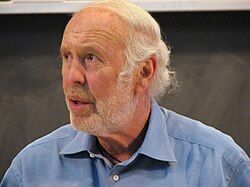
American mathematician and billionaire (1938–2024)
James Harris Simons was an American hedge fund manager, investor, mathematician, and philanthropist. At the time of his death, Simons's net worth was estimated to be $31.4 billion, making him the 55th-richest person in the world. He was the founder of Renaissance Technologies, a quantitative hedge fund based in East Setauket, New York. He and his fund are known to be quantitative investors, using mathematical models and algorithms to make investment gains from market inefficiencies. Due to the long-term aggregate investment returns of Renaissance and its Medallion Fund, Simons was called the "
James Harris Simons was born on April 25, 1938, to an American Jewish family, the only child of Marcia (née Kantor) and Matthew Simons, and raised in Brookline, Massachusetts. He received a bachelor's degree in mathematics from the Massachusetts Institute of Technology in 1958 which he completed in three years and a PhD in mathematics from the University of California, Berkeley under the supervision of Bertram Kostant in 1961, at age 23. After graduating from MIT, Simons traveled from Boston to Bogotá, Colombia, on a motor scooter.
In 2014, Simons reportedly earned $1.2 billion, including a share of his firm's management and performance fees, cash compensation, and stock and option awards. According to Forbes magazine, Simons had a net worth of $30 billion in 2023, making him the 25th-richest person on the Forbes 400 list. In 2018, he was ranked 23rd by Forbes, and in October 2019, his net worth was estimated at $21.6 billion. In March 2019, he was named one of the highest-earning hedge fund managers and traders by Forbes. At the time of his death, Simons's net worth was estimated to be $31.4 billion, making him the 55th-richest person on Forbes's 2024 The World's Billionaires list. Simons shunned the limelight and rarely gave interviews, citing Benjamin the Donkey in Animal Farm: "'God gave me a tail to keep off the flies. But I'd rather have had no tail and no flies.' That's kind of the way I feel about publicity." Simons was married twice and had five children. In 1996, his son Paul, aged 34, was killed in a car accident while riding his bicycle in Long Island. In 2003, his son Nicholas, aged 24, drowned on a trip to Bali, Indonesia. Simons's three surviving children all run charities of their own: Liz Simons founded the Heising-Simons Foundation, Nathaniel Simons founded the Sea Change Foundation, and Audrey Simons founded the Foundation For A Just Society. Simons owned a motor yacht named Archimedes. It was built at the Dutch yacht builder Royal Van Lent and delivered to Simons in 2008. Simons did not wear socks. He was known for smoking up to two packs a day of Merit cigarettes.
Simons gave over $4 billion to philanthropic causes. In 1994, he and his wife, Marilyn Hawrys Simons, co-founded the Simons Foundation, a charitable organization that supports projects related to education, health, and scientific research. The Simons Foundation established the Simons Foundation Autism Research Initiative (SFARI) in 2003 as a scientific initiative within the Simons Foundation's suite of programs. SFARI's mission is to improve the understanding, diagnosis and treatment of autism spectrum disorders. In 2004, Simons founded Math for America with an initial pledge of $25 million from the Simons Foundation, a pledge he doubled in 2006. The foundation continues to fund its operations, contributing nearly $22 million in 2018. Simons was among the largest contributors to his undergraduate alma mater, MIT. The couple and their foundation funded the renovation of the building housing the mathematics department, which in 2016 was named in their honor, and endowed the Simons Center for the Social Brain. Simons was a life member emeritus of the MIT Corporation. Simons was a major benefactor of his graduate alma mater, Berkeley. In 2012, the Simons Foundation pledged $60 million to Berkeley to establish the Simons Institute for the Theory of Computing, the world's leading institute for collaborative research in theoretical computer science. In 2020, the foundation made separate grants to B
Simons died peacefully in New York City on May 10, 2024, at age 86. He was active in the work of his foundation until the end of his life.
Simons's mathematical and physics work primarily focused on the geometry and topology of manifolds. His 1962 Berkeley PhD thesis, written under the direction of Bertram Kostant, gave a new proof of Berger's classification of the holonomy groups of Riemannian manifolds. He subsequently began to work with Shiing-Shen Chern on the theory of characteristic classes, eventually discovering the Chern–Simons secondary characteristic classes of 3-manifolds. Later, mathematical physicist Albert Schwarz discovered early topological quantum field theory, an application of the Chern–Simons form. It is also related to the Yang-Mills functional on 4-manifolds, and has had an effect on modern physics. These and other contributions to geometry and topology led to Simons becoming the 1976 recipient of the American Mathematical Society (AMS) Oswald Veblen Prize in Geometry. In 2014, he was elected to the U.S. National Academy of Sciences. In 1964, Simons worked with the National Security Agency to break codes. Between 1964 and 1968, he was on the research staff of the Communications Research Division of the Institute for Defense Analysis (CRD of IDA) and taught mathematics at the Massachusetts Institute of Technology and Harvard University. Simons also tried starting a trading company named iStar with colleagues including Richard Leibler, but was discovered by management, and the effort failed. After being forced to leave the IDA due to his public opposition to the Vietnam War, he joined the faculty at Stony Brook University. From 1968 to 1978, he chaired Stony Brook's math department. In 1973, IBM asked Simons to attack the block cipher Lucifer, an early but direct precursor to the Data Encryption Standard (DES). In 2004, Simons founded Math for America, a nonprofit organization with a mission to improve mathematics education in U.S. public schools by recruiting more highly qualified teachers.
Simons, J. (August 1967). "Minimal Cones, Plateau's Problem, and the Bernstein Conjecture". Proc Natl Acad Sci U S A. 58 (2): 410–411. Bibcode:1967PNAS...58..410S. doi:10.1073/pnas.58.2.410. PMC 335649. PMID 16578656. Simons, James (July 1968). "Minimal Varieties in Riemannian Manifolds". Annals of Mathematics. 88 (1): 62–105. doi:10.2307/1970556. hdl:10338.dmlcz/144360. JSTOR 1970556. Chern, S.-S.; Simons, J. (April 1971). "Some Cohomology Classes in Principal Fiber Bundles and Their Application to Riemannian Geometry". Proc Natl Acad Sci U S A. 68 (4): 791–794. Bibcode:1971PNAS...68..791C. doi:10.1073/pnas.68.4.791. PMC 389044. PMID 16591916. Cheeger, J.; Simons, J. (1973). "Differential characters and geometric invariants". In Geometry and Topology (College Park, Md., 1983/84), Lecture Notes in Math. (1985). 1167: 50–80. Chern, Shiing-Shen; Simons, James (January 1974). "Characteristic forms and geometric invariants". Annals of Mathematics. 99 (1): 48–69. doi:10.2307/1971013. JSTOR 1971013. Bourguignon, J.-P.; Lawson, H. B.; Simons, J. (April 1979). "Stability and gap ph
According to The Wall Street Journal in May 2009, investors questioned Simons about the dramatic performance gap between Renaissance Technologies' portfolios. The Medallion Fund, which has been available exclusively to current and past employees and their families, surged 80% in 2008 despite hefty fees; the Renaissance Institutional Equities Fund (RIEF), owned by outsiders, lost money in both 2008 and 2009; RIEF declined 16% in 2008. On July 22, 2014, Simons was subject to bipartisan condemnation by the U.S. Senate Permanent Subcommittee on Investigations for the use of complex basket options to shield day-to-day trading (usually subject to higher ordinary income tax rates) as long-term capital gains. "Renaissance Technologies was able to avoid paying more than $6 billion in taxes by disguising its day-to-day stock trades as long term investments", said Senator John McCain, the committee's ranking Republican, in his opening statement. In 2015, The New York Times reported that Simons was involved in one of the biggest tax battles of the year, with Renaissance Technologies "under review by the IRS over a loophole that saved their fund an estimated $6.8 billion in taxes over roughly a decade." In September 2021, it was announced that Simons and his colleagues would pay billions of dollars in back taxes, interest, and penalties to resolve the dispute, one of the biggest in IRS history.
Biographical detail compiled from Wikipedia and Wikidata, which are edited openly and may be incomplete or out of date. Fleet data is our own. Source →