 celebyachts.com
The maritime broadsheet of public waters · Register current through 27 Jul 2026
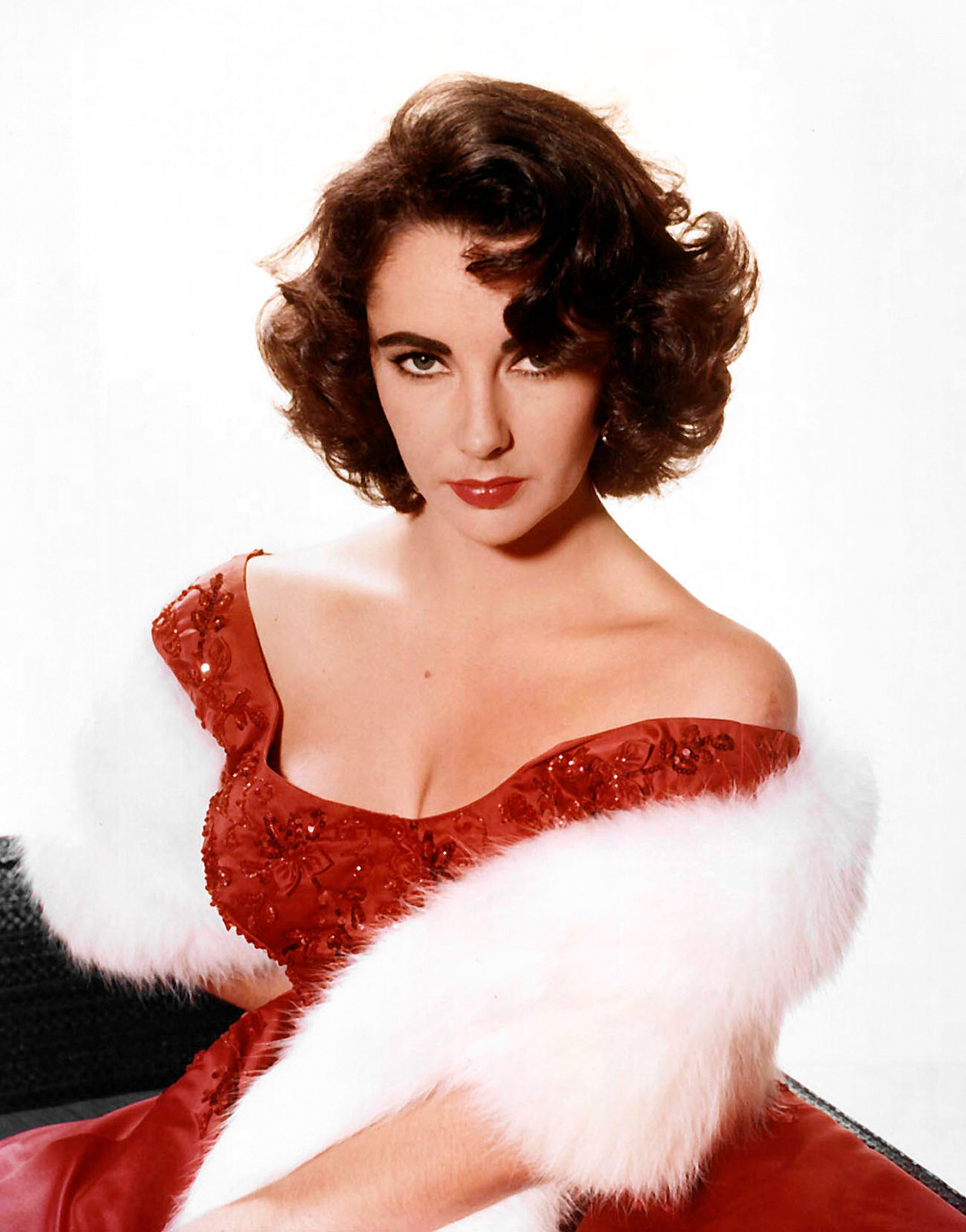
Welsh actor (1925–1984)
Richard Walter Burton was a Welsh actor.
Burton was born Richard Walter Jenkins Jr. on 10 November 1925 in a house at 2 Dan-y-bont in Pontrhydyfen, Glamorgan, Wales. He was the twelfth of thirteen children born into the Welsh-speaking family of Richard Walter Jenkins Sr. (5 March 1876 – 25 March 1957), and Edith Maude Jenkins (née Thomas; 28 January 1883 – 31 October 1927). Jenkins Sr., called Daddy Ni by the family, was a coal miner, while his mother worked as a barmaid at a pub called the Miners Arms in the village where she met her husband. They married, without approval of her parents, at Neath Register Office on 24 December 1900. According to biographer Melvyn Bragg, Richard is quoted saying that Daddy Ni was a "twelve-pints-a-day man" who sometimes went off on drinking and gambling sprees for weeks, and that "he looked very much like me". Jenkins Sr. was badly burned in a mining explosion and his father Thomas relied on a wheelchair after a mining accident. He remembered his mother to be "a very strong woman" and "a religious soul with fair hair and a beautiful face". Richard was barely two years old when his mother died on 31 October, six days after the birth of Graham, the family's thirteenth child. Edith's death was a result of postpartum infections; Richard believed it occurred because of "hygiene neglect". According to biographer Michael Munn, Edith "was fastidiously clean", but her exposure to the dust from the coal mines resulted in her death. Following Edith's death, Richard's elder sister Cecilia, whom he affectionately addressed as "Cis", and her husband Elfed James, also a miner, took him under their care until the age of seventeen. Richard lived with Cis, Elfed and their two daughters, Marian and Rhianon, in their three-bedroom terraced cottage on 73 Caradoc Street, Taibach, a suburban district in Port Talbot, which Bragg describes as "a tough steel town, English-speaking, grind and grime".
Richard remained grateful and loving to Cis throughout his life, later going on to say: "When my mother died she, my sister, had become my mother, and more mother to me than any mother could ever have been ... I was immensely proud of her ... she felt all tragedies except her own". Daddy Ni would occasionally visit the homes of his grown daughters but was otherwise absent. Another important figure in Richard's early life was Ifor, his brother, 19 years his senior. A miner and rugby union player, Ifor "ruled the household with the proverbial firm hand". He was also responsible for nurturing a passion for rugby in young Richard. Although Richard also played cricket, tennis, and table tennis, biographer Bragg notes rugby union football to be his greatest interest. On rugby, Richard said he "would rather have played for Wales at Cardiff Arms Park than Hamlet at The Old Vic". The Welsh rugby union centre, Bleddyn Williams, believed Richard "had distinct possibilities as a player". From the age of five to eight, Richard was educated at the Eastern Primary School, and he attended the boy
Burton was married five times, twice consecutively to Taylor. From 1949 until 1963, he was married to Sybil Williams, with whom he had two daughters, Kate (born 1957) and Jessica Burton (born 1959). During the marriage Burton had a long affair with actress Claire Bloom. Burton told biographer Michael Munn "'I only ever loved two women before Elizabeth,' Sybil was one, Claire Bloom the other." Burton's marriages to Taylor lasted from 15 March 1964 to 26 June 1974 and from 10 October 1975 to 29 July 1976. Their first wedding was at the Ritz-Carlton Hotel in Montreal. Of their marriage, Taylor proclaimed, "I'm so happy you can't believe it. This marriage will last forever." Their second wedding took place 16 months after their divorce, in Chobe National Park in Botswana. Taylor and Eddie Fisher adopted a daughter from Germany, Maria McKeown (born 1961), who was re-adopted by Burton after he and Taylor married. Burton also re-adopted Taylor and producer Mike Todd's daughter, Elizabeth Frances "Liza" Todd (born 1957), who had been first adopted by Fisher. The relationship Burton and Taylor portrayed in the film Who's Afraid of Virginia Woolf? was popularly likened to their real-life marriage. Burton disagreed with others about Taylor's famed beauty, saying that calling her "the most beautiful woman in the world is absolute nonsense. She has wonderful eyes, but she has a double chin and an overdeveloped chest, and she's rather short in the leg." In August 1976, a month after his second divorce from Taylor, Burton married model Suzy Miller, the former wife of Formula 1 Champion James Hunt; the marriage ended in divorce in 1982. From 1983 until his death in 1984, Burton was married to a freelance production assistant Sally Hay. In 1974, between his divorce from and remarriage to Taylor, he was briefly engaged to Princess Elizabeth of Yugoslavia. In 1957, Burton had earned a total of £82,000 from Prince of Players, The Rains of Ranchipur and Alexander the Great, but only managed to keep £6,000 for personal expenses due to taxation imposed by the then-ruling Conservative government. As a result of a suggestion by his lawyer Aaron Frosch that he move to Switzerland, where the tax rate was lower, Burton moved with Sybil in January 1957 to Céligny, Switzerland, where he purchased a villa. In response to criticism from the British government, Burton remarked: "I believe that everyone should pay them — except actors." Burton lived there until his death. In 1968, Burton's elder brother, Ifor, slipped and fell, breaking his neck, after a lengthy drinking session with Burton in Céligny. The injury left him paralysed from the neck down. His younger brother Graham Jenkins speculated that guilt over this may have caused Burton to start drinking very heavily, particularly after Ifor died in 1972. In a February 1975 interview with his friend David Lewin, he said he "tried" homosexuality. He also suggested that perhaps all actors were latent homosexuals, and "we cover i
In 1943, Burton played Professor Henry Higgins in a school production of another Shaw play directed by Philip, Pygmalion. The role won him favourable reviews and caught the attention of the dramatist, Emlyn Williams, who offered Burton a small role as the lead character's elder brother, Glan, in his play The Druid's Rest. The play debuted at the Royal Court Theatre, Liverpool on 22 November 1943, and later premiered in St Martin's Theatre, London in January 1944. Burton thought the role was "a nothing part" and that he "hardly spoke at all". He was paid ten pounds a week for playing the role (equivalent to £383 in 2025), which was "three times what the miners got". Alpert states that the play garnered mixed critical reviews, but James Redfern of the New Statesman took notice of Burton's performance and wrote: "In a wretched part, Richard Burton showed exceptional ability." Burton noted that single sentence from Redfern changed his life. While an undergraduate at Exeter College, University of Oxford, Burton featured as "the complicated sex-driven puritan" Angelo in the Oxford University Dramatic Society's 1944 production of William Shakespeare's Measure for Measure. The play was directed by Burton's English literature professor, Nevill Coghill, and was performed at the college in the presence of additional contributors to West End theatre including John Gielgud, Terence Rattigan and Binkie Beaumont. On Burton's performance, fellow actor and friend, Robert Hardy recalled, "There were moments when he totally commanded the audience by this stillness. And the voice which would sing like a violin and with a bass that could shake the floor." Gielgud appreciated Burton's performance and Beaumont, who knew about Burton's work in The Druid's Rest, suggested that he "look him up" after completing his service in the RAF if he still wanted to pursue acting as a profession. In late 1944, Burton successfully completed his six-month scholarship at Exeter College, Oxford, and went to the RAF classification examinations held in Torquay to train as a pilot. He was disqualified for pilot training because his eyesight was below par, and was classified as a navigator trainee. He had a short term posting for training at a temporary RCAF training base in Carberry, Manitoba. He served in the RAF for three years, during which time rather than flight crew he was assigned as an Aircraftman 1st Class to perform an administrative role in a Wiltshire-based RAF Hospital, RAF Wroughton. Burton's habits of drinking and smoking increased during this period; he was involved in a brief casual affair with actress Eleanor Summerfield. Burton was cast in an uncredited and unnamed role of a bombing officer by BBC Third Programme in a 1946 radio adaptation of In Parenthesis, an epic poem of the First World War by David Jones. Burton was discharged from the RAF on 16 December 1947.
Appointed Commander of the Order of the British Empire (CBE) in the 1970 Birthday Honours, he received the
Biographical detail compiled from Wikipedia and Wikidata, which are edited openly and may be incomplete or out of date. Fleet data is our own. Source →