 celebyachts.com
The maritime broadsheet of public waters · Register current through 27 Jul 2026
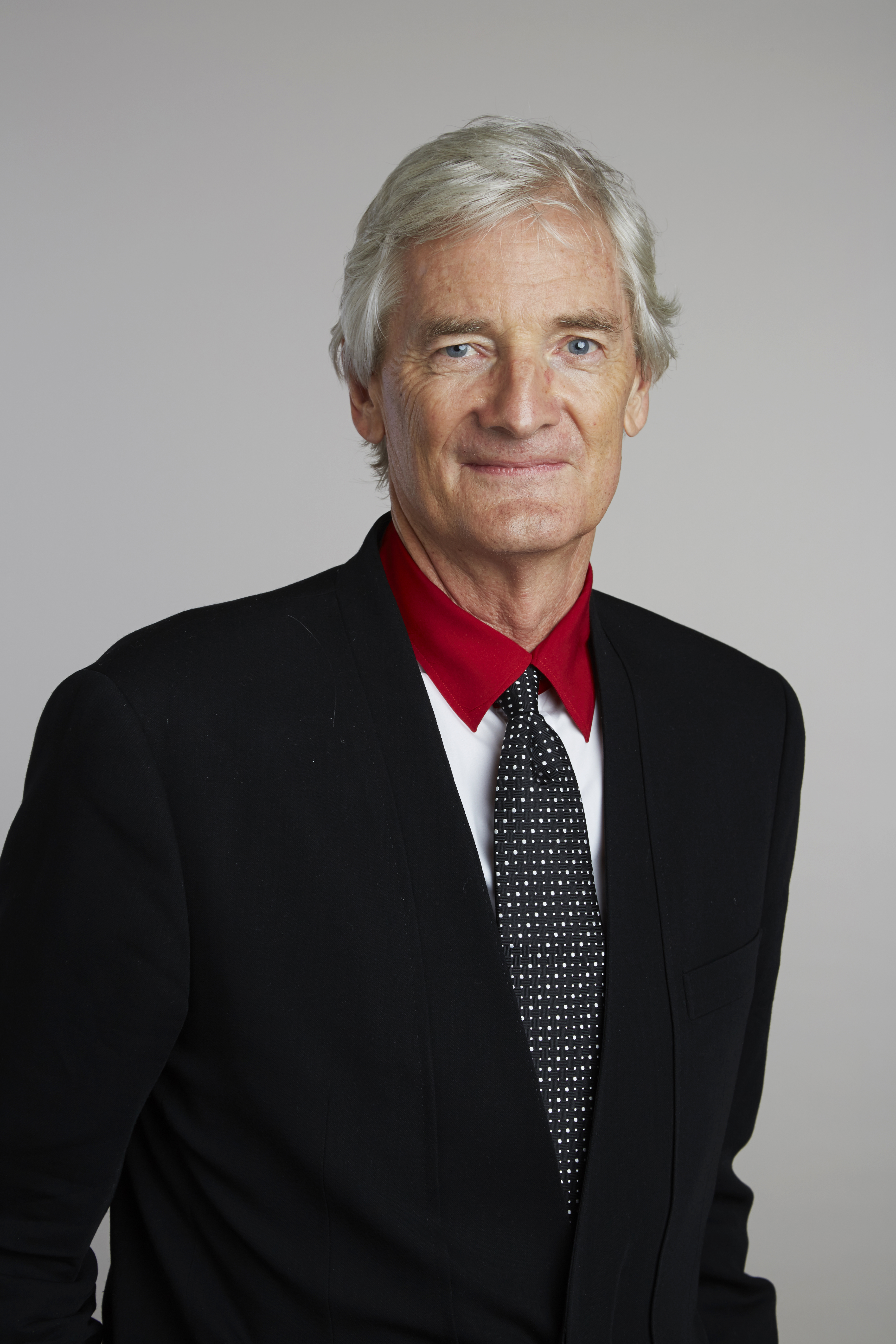
British inventor and businessman (born 1947)
Sir James Dyson is an English inventor, industrial designer, farmer, and business magnate who founded the company Dyson. He is best known as the inventor of the bagless vacuum cleaner, which works on the principle of cyclonic separation. In the Sunday Times Rich List 2023, he was the fifth-richest person in the United Kingdom, with an estimated family net worth of £23 billion. As of March 2025, Forbes lists Dyson's net worth as $13.3 billion.
James Dyson was born on 2 May 1947 in Cromer, Norfolk, one of three children of Janet M. (née Bolton) and Alec William Dyson. He was named after his grandfather, James Dyson. His father died of prostate cancer when he was nine years old and he described his childhood home as 'penniless' after his father's death. He was nonetheless educated at Gresham's School, an independent boarding school in Holt, Norfolk, from 1956 to 1965, due to the headmaster agreeing to pay his school fees. At school he excelled at long-distance running, and said he learned determination from it. Dyson spent a year, 1965–1966, at the Byam Shaw School of Art, choosing the school because of its excellent reputation under principal Maurice de Sausmarez's leadership. Dyson credits de Sausmarez's guidance and teaching with inspiring him to become a designer. In 2015 Dyson spoke at the opening of a retrospective exhibition of de Sausmarez's work at the University of Leeds, speaking of the great influence the artist and former principal had on him and his career. He studied furniture and interior design at the Royal College of Art between 1966 and 1970, before moving into engineering. It was while attending the Royal College of Art to study fine art that he transferred to industrial design, partly because of the tutorage of structural engineer Anthony Hunt.
Dyson has several times accused Chinese spies and students of copying technological and scientific secrets from the UK through the planting of software bugs and by infiltrating British industries, institutions, and universities after they left. He also complained that China benefits from stealing foreign designs, flouting of product copyrights, and a two-speed patent system that discriminates against foreign firms with unreasonably longer times.
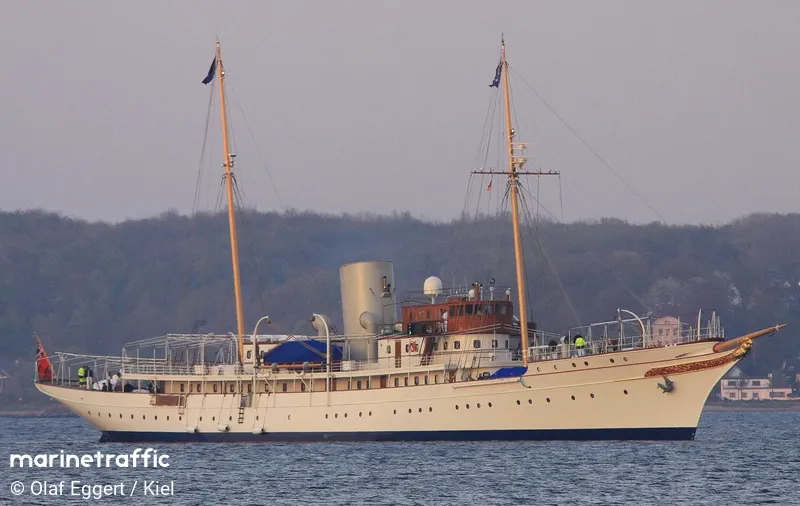
Dyson married Deirdre Hindmarsh in 1968. They have two sons and a daughter. In 1999, he acquired Domaine des Rabelles, an estate and winery near Villecroze and Tourtour, Var, France. In 2003, Dyson paid £15 million for Dodington Park, a 300-acre (1.2 km2) Georgian estate in South Gloucestershire close to Chipping Sodbury. He and his wife also own a house in Chelsea, London. His vessel Nahlin is the largest British-flagged and -owned superyacht with an overall length of 91 metres (299 ft), and was ranked 36th in a 2013 survey of the world's 100 biggest yachts. He also owns two Gulfstream G650ER private jets registered G-VIOF and G-GSVI. He previously owned an older Gulfstream G650, registered G-ULFS and currently owns a AgustaWestland AW-139 helicopter. Dyson is a lifelong fan of Bath Rugby and has frequently attended games at the Rec. The Dyson company have been the title sponsors of the club since 2014, with Bath Rugby being the first sports team officially backed by the firm. As a result of this, Dyson are the main brand on all club kit and are the naming rights holders of the East Stand at the Rec. In July 2019, Dyson spent £43 million on a 21,108-square-foot (1,961.0 m2) triplex flat at the top of the Guoco Tower, the tallest building in Singapore. He sold the flat in October 2020 for £36 million, and in April 2021 it was reported that he had moved his place of residence back to the UK. Dyson has also invested heavily in buying agricultural land in Lincolnshire, Oxfordshire, and Gloucestershire, and by 2014 was one of the biggest landowners in the UK. Dyson is the beneficial owner of Weybourne Holdings Pte, a Singapore-based business that (as of 2023) owns 31 UK properties, worth at least £287 million.
Dyson set up the James Dyson Foundation in 2002 to support design and engineering education. It is a registered charity under English law and operates in the UK, US, and Japan. The foundation aims to inspire young people to study engineering and become engineers by encouraging students to think differently and to make mistakes. The foundation supports engineering education in schools and universities, as well as medical and scientific research in partnership with charities. It achieves this by funding resources such as the "Engineering Box", a box filled with activities for a school to use as a teaching aid. In May 2014, the foundation announced an £8 million donation to create a technology hub at the University of Cambridge. The donation would also allow for a design and construction lab to be developed for undergraduate engineering students. In March 2015, the foundation gave £12 million to Imperial College London to allow the purchase of a Post Office building in Exhibition Road from the Science Museum. Imperial College was to open the Dyson School of Design Engineering in this building, and teach a new four-year master's degree in design engineering. Around 2021, the foundation gave £4 million towards the construction of a £27 million hub for cancer services at the Royal United Hospital, Bath, to be called the Dyson Cancer Centre. This followed a £500,000 donation to the Dyson Centre for Neonatal Care at the same hospital, which opened in 2011. The foundation supports the work of young designers through the James Dyson Award, an international design award that "celebrates, encourages and inspires the next generation of design engineers". Dyson is also a trustee of The James and Deirdre Dyson Trust, a separate charity through which he and his wife make personal donations in various fields. In June 2019, the charity donated £18.75 million to Dyson's old school, Gresham's, to build a new STEAM Education building, which was completed in 2021. In November 2023, the charity made a further donation of £35 million to Gresham's School to develop a prep school with a new building incorporating STEAM education facilities for pupils aged seven to 13.
Biographical detail compiled from Wikipedia and Wikidata, which are edited openly and may be incomplete or out of date. Fleet data is our own. Source →